
Introduction
Influencer marketing is no longer just a trending buzzword; it has become a core pillar of modern digital marketing. Brands today rely on influencers to build trust, reach new audiences, and create authentic conversations. Agencies play a huge role in this because they understand how to blend creativity, strategy, and analytics to get real results.
Understanding the Brand’s Objectives
Before agencies contact influencers, they first try to understand the brand’s goals deeply.
Setting Clear Campaign Goals
Is the brand looking for:
- More sales and conversions?
- Right Audience?
- Brand Awareness?
- App downloads?
- Creating a brand community?
Each goal requires a different influencer strategy.
Identifying the Target Audience
Agencies define who needs to see the campaign:
- Age group
- Gender
- Interests
- Demographics
This ensures influencers speak to the right people.
Aligning Brand Voice and Messaging
Agencies make sure the campaign reflects the brand’s personality, fun, luxury, bold, or professional.
Research and Influencer Discovery
Finding the right influencer is the heart of the whole process.

How Agencies Find the Right Influencers
They look at:
- Niche relevance
- Content style
- Tone of communication
- Engagement quality
Tools and Platforms Agencies Use
Agencies use influencer discovery tools like:
- Upfluence
- AspireIQ
- CreatorIQ
- Social Blade
These tools help track real numbers and results.
Types of Influencers
- Nano Influencers: 1K–10K followers
- Micro Influencers: 10K–100K followers
- Macro Influencers: 100K–1M followers
- Celebrities: 1M+ followers
Each type serves a different campaign purpose.
Vetting and Evaluating Influencers
Not all influencers are real influencers. Agencies dig deep before selecting them.

Checking Authenticity and Engagement Rates
Agencies check:
- Fake followers
- Fake likes
- Bot comments
- Average engagement rate
A high follower count doesn’t always mean real influence, because a good engagement rate is key success for an influencer’s content.
Audience Demographics Analysis
Agencies check who follows the influencer:
- Countries (The first priority of brand)
- Age range
- Gender split
Past Brand Collaborations
They also check how well the influencer performed in previous campaigns.
Strategy and Creative Planning
Once influencers are selected, agencies start the creative planning process.
Designing Campaign Concepts
They brainstorm creative ideas that fit the brand’s message.
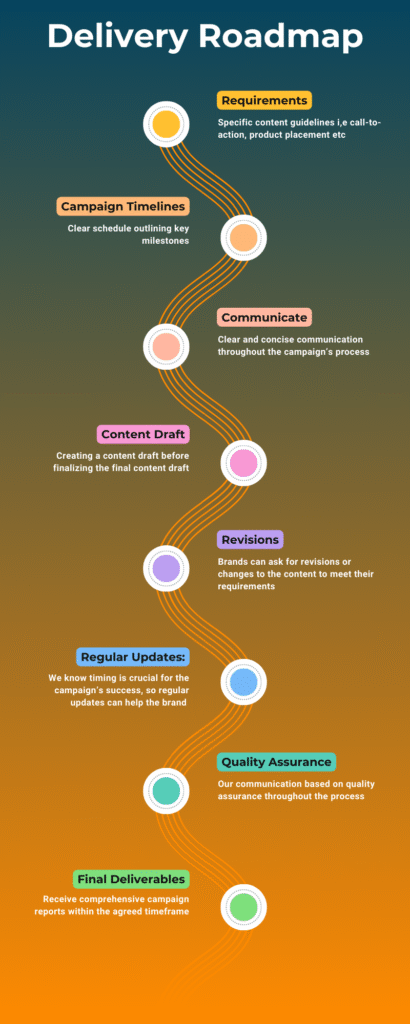
Crafting Clear Deliverables
This includes:
- Number of posts
- Reels
- Stories
- Videos integrations
- Blog posts
Content Format Planning
Agencies decide what form of content will perform best on each platform.
Contracting and Negotiation
This step ensures clarity for both sides.
Setting Fair Pricing
Agencies negotiate based on:
- Influencer size
- Engagement rate
- Content quality
These three are the most common features that required by brand
Usage Rights and Exclusivity
Brands may want to reuse influencer content in future ads. These rights should be clearly defined in the contract agreement when finalizing the campaign.
Deliverables, Timelines, and Payment Terms
Everything is written clearly to avoid confusion later.
Content Creation and Collaboration

How Agencies Work With Influencers
They guide influencers but allow them to stay authentic.
Maintaining Creative Freedom vs Brand Control
Too much control makes content look like an ad. Too much freedom can go off-brand. Agencies balance both.
Approvals and Quality Checks
Before posting, agencies check:
- Accuracy
- Quality
- Messaging
- Compliance
Campaign Execution
Scheduling Posts and Tracking Live Content
Agencies plan post timings to ensure maximum engagement.
Engagement Monitoring
They track:
- Likes
- Shares
- Comments
- Saves
Managing Audience Interactions
Agencies respond to important comments if needed.
Measuring Results & Analytics
Key Metrics Agencies Track
- Impressions
- Clicks
- Engagement rate
- Conversions
- Sales

Tools for Reporting
Agencies use analytics dashboards to prepare professional reports.
ROI Calculation and Performance Review
They determine which influencer delivered the best results.
Optimizing Future Campaigns
Learning From Data
Agencies analyze what worked and what didn’t.
Building Long-Term Influencer Relationships
Long-term partnerships build stronger trust.
Scaling Strategies Over Time
Once the formula works, agencies scale it to new audiences.
Common Challenges Agencies Face
Fake Influencers
Fake followers waste the brand’s money.
Budget Constraints
Sometimes the ideal influencer costs more than the brand’s budget.

Mismatched Brand-Influencer Fit
Poor fit can ruin campaign performance.
Why Brands Prefer Agencies for Influencer Marketing
Expertise and Industry Experience
Agencies know exactly what works and what doesn’t.
Access to Tools and Influencer Networks
They have tools that brands usually don’t.
Time Saving and Professional Execution
Agencies handle everything from start to end of each campaign.
FAQs
1. Why should brands work with agencies for influencer marketing?
Because agencies have expertise, tools, and networks that make campaigns more effective.
2. How do agencies choose influencers?
They use tools and analytics to check authenticity, engagement, and audience relevance.
3. How do agencies measure success?
Through metrics like impressions, clicks, engagement, conversions, and ROI.
4. Can small brands also use influencer marketing?
Yes, micro and nano influencers are perfect for small brands.
5. How long does an influencer campaign take?
Usually 4-8 weeks, depending on planning and content creation.
Check here to see more related questions…..
Conclusion
Influencer marketing has become one of the most effective ways for brands to connect with real audiences, and agencies play a vital role in making this process smooth and successful. By understanding a brand’s goals, selecting the right influencers, planning creative content, and tracking performance, agencies ensure every campaign delivers measurable results. Their expertise helps brands avoid common mistakes like choosing fake influencers or mismatched partnerships. With the right approach, influencer marketing can boost awareness, trust, and sales faster than many traditional methods. In the end, agencies help brands build strong, long-term relationships with influencers that lead to sustainable growth and lasting impact.
Pingback: How Much Do Influencer Marketing Agencies Make
Pingback: How Do Influencer Marketing Agencies Make Money