
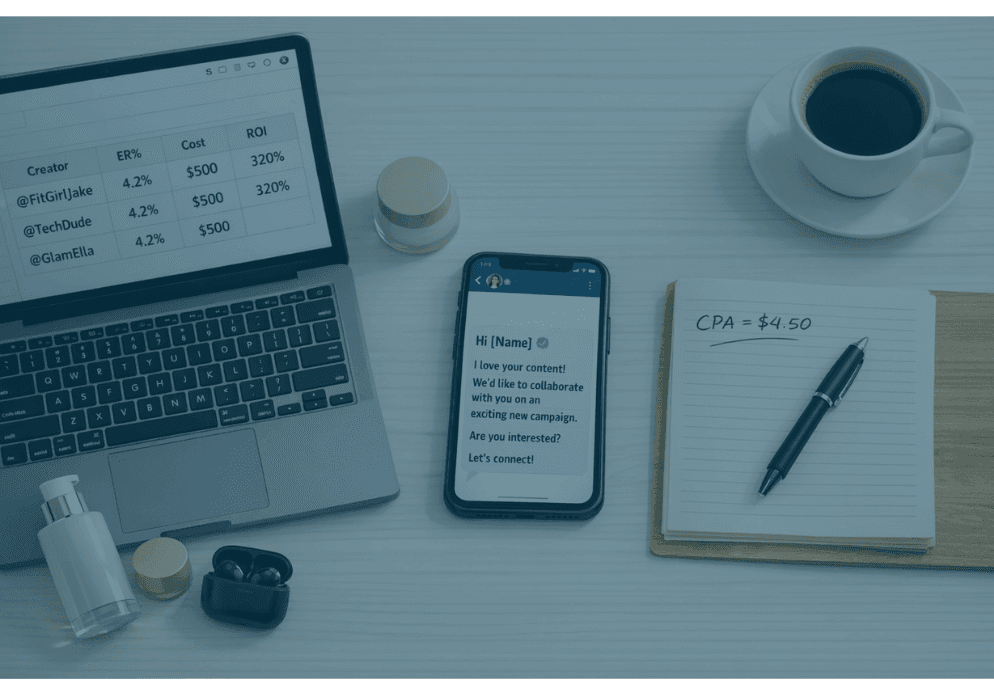
How To Run Influencer Marketing Without an Agency?
Everyone tells you that influencer marketing is the ‘cheat code’ for growth, but then you look at agency fees and realize they want influencer marketing agency.
So, what? Do you just ignore one of the most potent traffic sources on the internet because you’re bootstrapping?
Absolutely not. Today, I’m showing you the exact blueprint for how to run influencer marketing without an agency. No massive overhead, no gatekeepers, just pure, unadulterated results driven by your own two hands.
The truth is, agencies thrive on the perception of complexity. They want you to believe you need their “black book of contacts” and “proprietary software.” The reality? You just need a system. Let’s dive into the DIY playbook that saves you thousands while building more authentic relationships than any outsourced email blast ever could.
Defining Your Goals
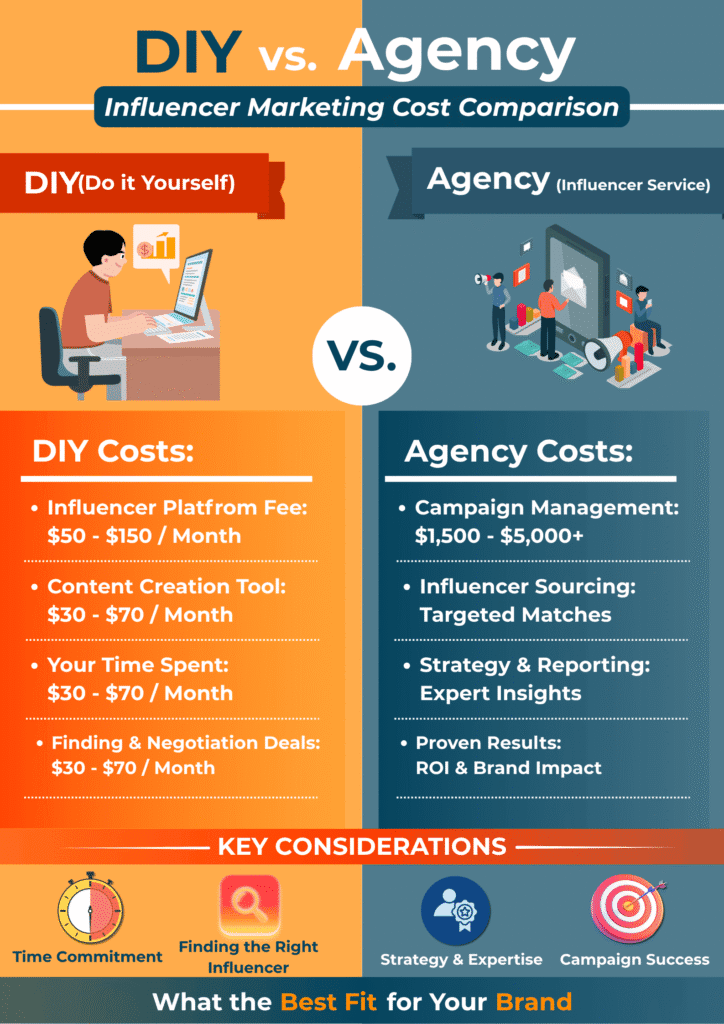
Before you send a single DM or even open Instagram on your desktop, you need absolute clarity on why you’re doing this. This is the step where most DIY campaigns fail. They think, “I want to go viral.” That’s not a goal; that’s a wish.
When you’re figuring out how to run influencer marketing without an agency, you must be the strategist. Agencies charge for this upfront analysis. You’re going to do it for free, and you’re going to do it better because nobody knows your margins better than you.
There are two primary camps here: Brand Awareness or Direct Sales. They require two completely different types of creators.
- Awareness Campaigns: You want reach-heavy creators. These are the storytellers, the vloggers, the people with high views but perhaps lower comment sections. You’re not necessarily looking for them to sell 100 units today; you’re looking for them to plant a seed in the minds of 100,000 people. This is a long game.
- Conversion Campaigns: You need conversion-focused influencers. These are the micro-influencers (10k-50k followers) with a cult-like following. They have a tight-knit community that trusts their recommendations like gospel. If they say, “Buy this,” their audience opens a new tab immediately. For bootstrapped brands, this is often the highest ROI spot.
Setting Your KPIs
If you don’t measure it, you can’t improve it. When running this in-house, you need a clean, visual way to track success. We recommend creating a simple spreadsheet or even a Notion dashboard that mirrors the SMART framework.
| KPI Category | Awareness Metric | Conversion Metric |
|---|---|---|
| Specific | Reach (Impressions) | Clicks / Traffic |
| Measurable | 50,000 Impressions | 500 Link Clicks |
| Achievable | Based on avg. views per creator | Based on engagement rate |
| Relevant | Top of Funnel Growth | Bottom of Funnel Sales |
| Time-bound | 7 Days Post-Launch | 3 Days Post-Launch |
By setting these KPIs in advance, you eliminate the guesswork. You’ll know within 72 hours if you’re looking at a flop or a home run.
The Discovery Phase
Now for the part that feels like detective work. When people ask how to run influencer marketing without an agency, they’re usually terrified of this step. How do you find the right people without a rolodex (it’s an iconic rotating desktop card file used for storing contact information)?
Finding influencers isn’t just about follower count…… that’s a rookie mistake. You’re looking for two critical data points: Engagement Rate (ER) and Audience Alignment. How influencers help brands on social media?
- Follower Count: Vanity metric.
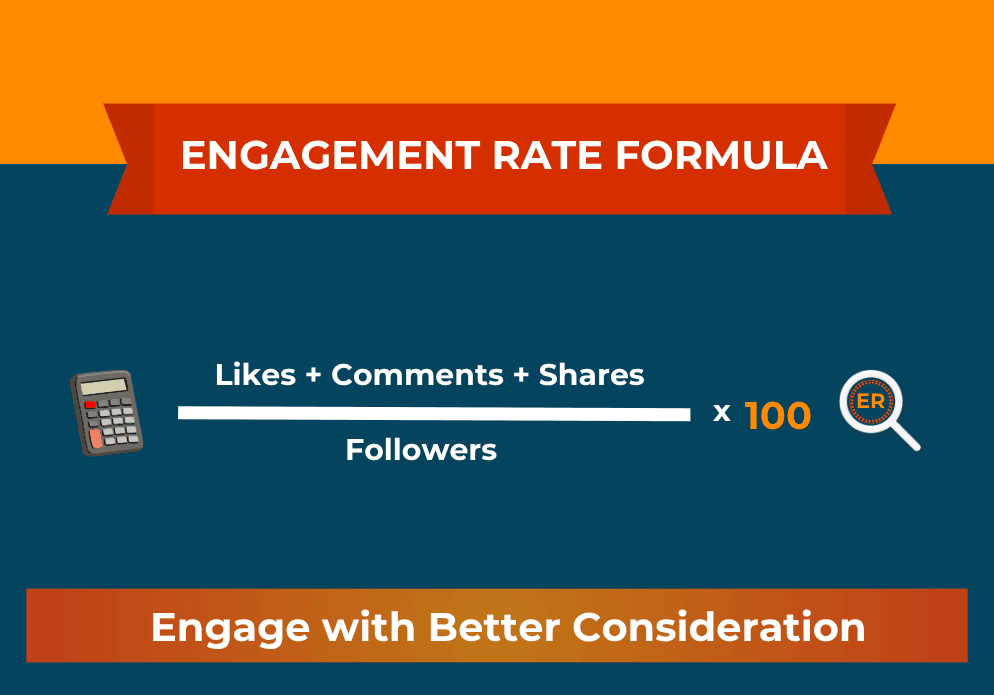
- Engagement Rate: The percentage of followers who actually interact (likes + comments + share / followers). Aim for 1.5% – 4.0% for micro-influencers. Anything higher might be an engagement pod; anything lower means a dead audience.
Using Niche Hashtags for Discovery
Forget searching “fitness.” You’ll drown. You need to go deep. Suppose if you sell ergonomic office chairs for remote workers, don’t search #OfficeDecor instead search #DeskSetupTour or #WFHLife.
Here’s the Influencer Marketings manual search hack:
- Open Instagram or TikTok.
- Search a hyper-niche hashtag (e.g., #HomeEspressoRoutine if you sell coffee beans).
- Sort by “Top Posts” from the last 30 days.
- Click on a post that looks like the aesthetic of your brand.
- Check the creator’s handle, not the repost page. This is crucial.
- Look at the “Suggested for You” accounts underneath their profile. This is the platform’s algorithm doing the heavy lifting for you, showing you 5-10 similar creators instantly.
Auditing Influencer Authenticity
You found someone with 50k followers and pretty pictures. But are those followers real? You must audit for authenticity to avoid lighting your budget on fire. Look for these red flags:
- The Comment-to-Like Ratio: A photo with 5,000 likes but only 12 comments (and those comments are just “🔥🔥🔥” or “Nice pic”) screams bought engagement or bot followers.
- Audience Demographics Tool: Use a free tier of a tool like HypeAuditor or Modash (just the Chrome extension preview). They give you a “Fake Follower” estimate. If it’s over 25%, walk away.
- The Content Scroll Test: Scroll back through their feed for 60 seconds. Do they do a brand deal every single day? If so, their audience is fatigued and will ignore your product.
The Outreach Strategy
Agencies have ‘lists,’ but you have ‘personalization.’ This is your secret weapon. An agency might send 100 templated emails a day. You can send 10 highly-targeted DMs that actually get a response.
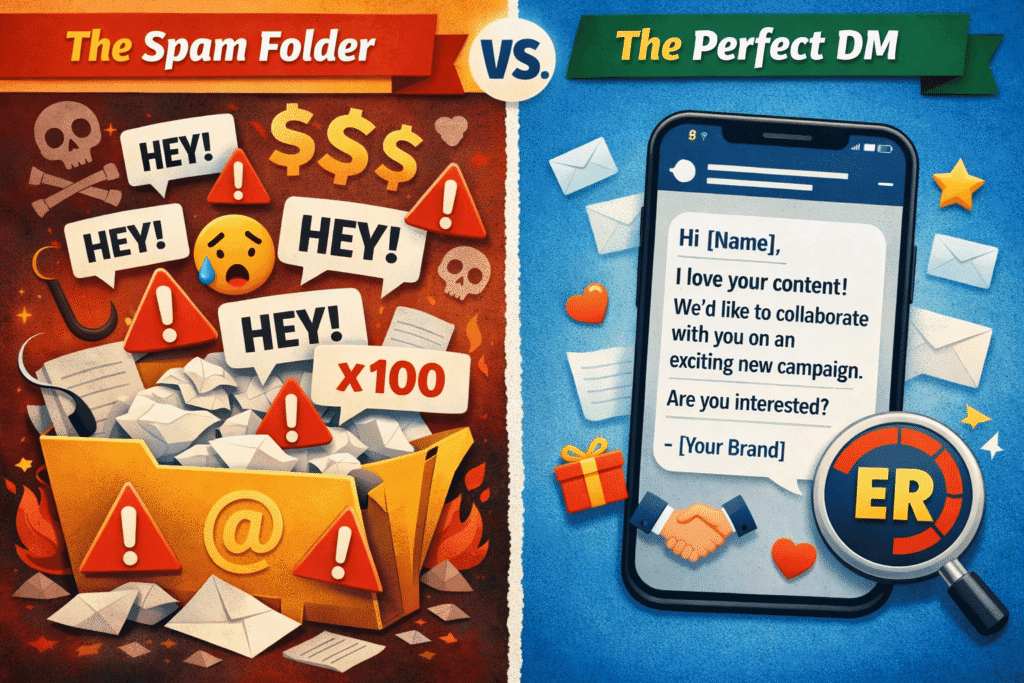
The biggest mistake in learning how to run influencer marketing without an agency is sending the dreaded DM: “Hey babe, we love your vibe! Collab?”
Delete that. Burn it. Never speak of it again.
Building the Perfect Pitch
You need to stand out in an inbox flooded with spam. The Influencer Marketings Outreach Template (which consistently gets a 40%+ response rate) follows this structure:
- The Genuine Compliment (Specific): Mention a specific video, Reel, or detail. “Just watched your Reel about the struggles of getting the perfect milk froth consistency. As a fellow caffeine addict, I felt that in my soul.”
- The Seamless Bridge: Connect their content to your product naturally. “I noticed you use a lot of earthy tones in your flat lays and that your audience is really into clean morning rituals.”
- The Clear, Low-Pressure Ask: “We’re a small ceramic studio that just launched a new hand-thrown mug designed specifically for the perfect latte art pour. Would you be open to us sending one over? No hard sell required…… we just want to see what you think of the weight and texture compared to your current setup.”
Notice there is no mention of a “required post” or “deliverables” in that first message. You’re building a relationship first.
Follow-up Etiquette
Creators are busy. If you don’t hear back in 4-5 days, send ONE follow-up. Just one.
- Subject: “Just in case the DM monster ate this”
- Body: “Hey [Name], totally get it if you’re busy. Just knocking this to the top in case you missed it. No pressure either way!”
If they don’t respond to the follow-up, archive the chat and move on. Do not triple text. It shows desperation and is a surefire way to get blocked.
Negotiation & Contracts
This is where people get scared without an agency. You need to talk about Usage Rights, Deliverables, and Deadlines. Many DIY marketers skip this and end up with a creator posting a blurry photo at 2:00 AM with a broken link.
You don’t need a 20-page legal document drafted by a $500/hour lawyer, but you do need a clear Scope of Work (SOW). Always get it in writing, even if it’s just a detailed email they reply “Agreed” to. This protects both of you.
Essential Contract Clauses long-term creator partnerships
Here are the non-negotiables to include in your SOW email or simple contract template:
- Deliverables: Be excruciatingly specific.
- Bad: “1 Instagram Post.”
- Good: “1 Static In-Feed Instagram Post featuring the product visibly in hand, with 3 unique shots (lifestyle, close-up, flat lay) to be posted on Wednesday, Oct 26th, between 10am-12pm EST.”
- Usage Rights Paid Media Integration: This is the most expensive mistake DIY brands make. You pay a creator $200 for a post. They post it. 3 months later, you run a Facebook Ad using that same photo. They can legally charge you a licensing fee (often 10x the post fee).
- Clause to include: “Brand has 12-month whitelisting and paid media usage rights for the content created under this agreement.”
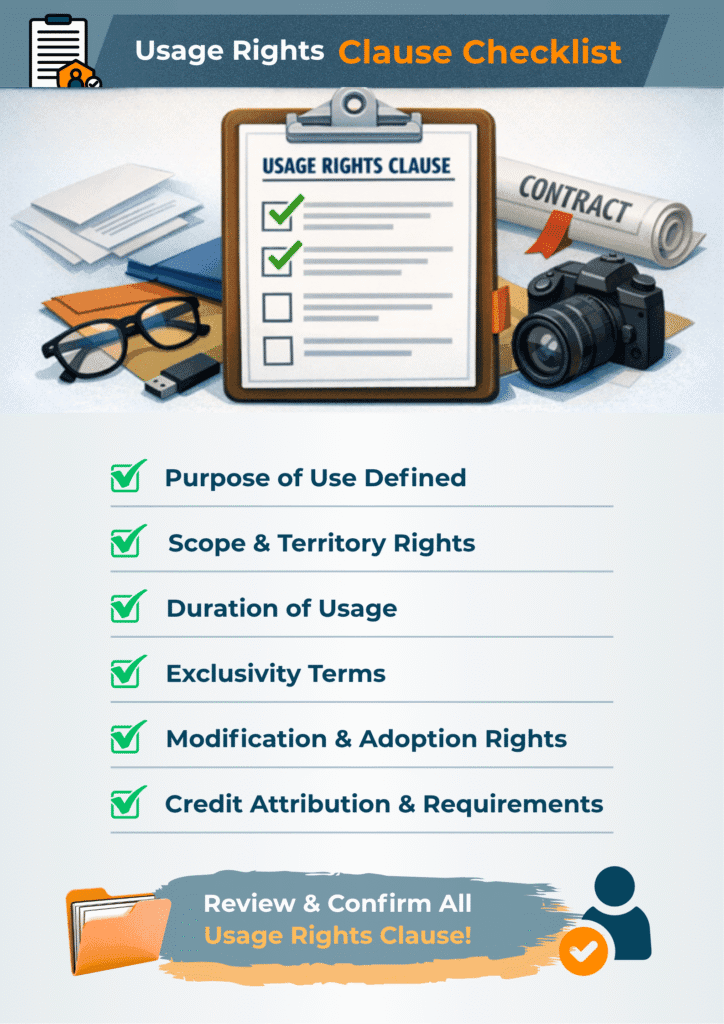
- Exclusivity: Is this creator promoting your competitor’s coffee next week? If you want exclusivity for 30 days, you generally need to pay a premium (usually +20-30%).
- Deadline and Posting Window: Include a 48-hour “review window” where you must approve the draft before it goes live.
Measuring Success & Conclusion
The campaign is live, now what? You don’t just sit back and hope. You track. This is how you prove ROI to yourself and justify doing this again next month.
Agencies charge a premium for “attribution modeling.” You can do 90% of it with two free tools.
Tracking ROI with UTMs
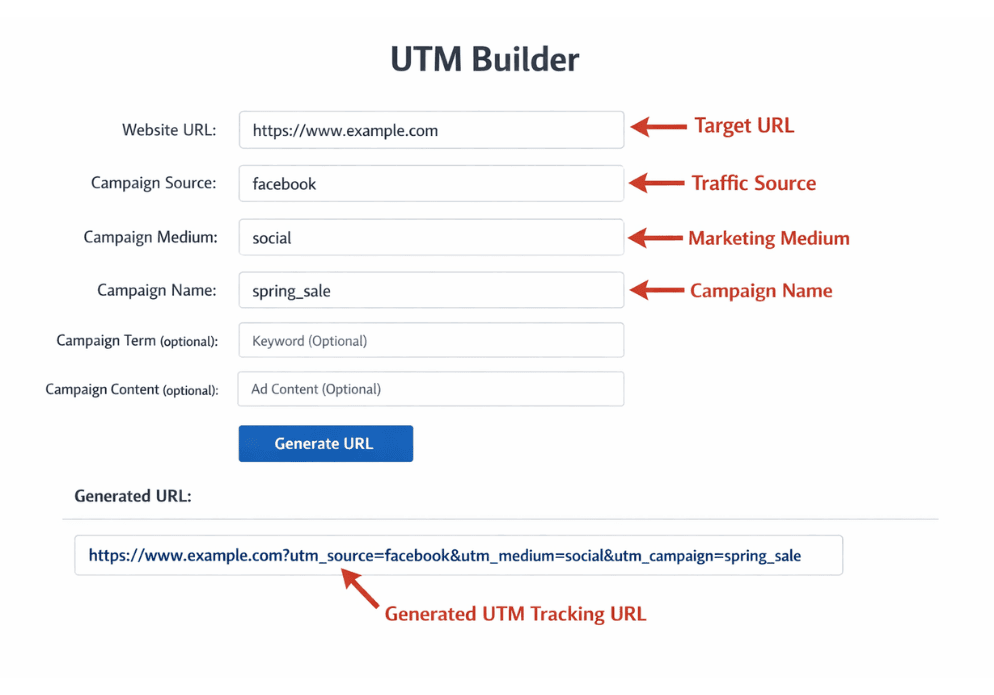
This is non-negotiable. You must build an Urchin Tracking Module (UTM) link using Google’s Campaign URL Builder.
Your UTM Formula:
- Website URL:
yourstore.com/collections/new-arrivals - Campaign Source:
instagram - Campaign Medium:
influencer - Campaign Name:
[CreatorHandle]_[MonthYear](e.g.,coffeewitherin_oct26)
Unique Discount Codes:
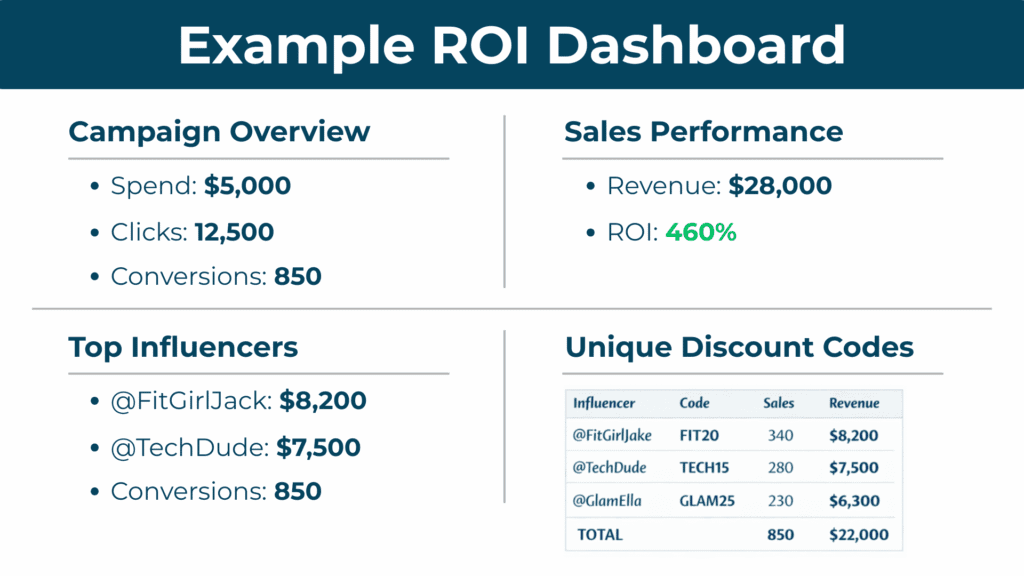
Give every creator a unique code. Not just “SAVE10”, make it “ERIN10” or “JAMES15.” This is the most foolproof way to see exactly who drove sales, regardless of whether the user clicked the link.
The Wrap-Up Analysis
After the 48-hour posting window, pull the data.
- Link Clicks: (From the UTM in Google Analytics).
- Code Uses: (From your Shopify/Commerce backend).
- Impressions/Reach: (Screenshot the creator’s post insights, they should provide this per contract).
Calculate your Cost Per Acquisition (CPA).
Total Cost of Product Sent + Fee Paid / Number of Sales = CPA
If your CPA is below your margin threshold, congratulations. You’ve just successfully mastered how to run influencer marketing without an agency.
If you enjoyed this deep dive, hit subscribe to Influencer Marketings for more DIY growth hacks. The agency model can be dead; the self-reliant founder model is just getting started.
FAQs:
Maybe you have question about Running Influencer Marketing Solo…… I name it RIMS.
Do I need a massive budget to run influencer marketing without an agency?
Absolutely not. In fact, this is the primary benefit of going DIY. Without agency retainer fees eating up 20-30% of your budget, you can put that money directly into product seeding or micro-influencer fees. You can start with a product-only budget (gifting) and scale up to paid collaborations as you see ROI.
How do I handle contracts legally if I’m not a lawyer?
While you should eventually have a lawyer review a template, for small campaigns (under $500 value), a detailed email outlining the “Scope of Work” and having the creator reply “I agree to these terms” constitutes a binding agreement in most jurisdictions. Focus on clarity regarding Usage Rights, as that is where most financial disputes arise.
What is the ideal follower count for a DIY campaign?
For brands learning how to run influencer marketing without an agency, the sweet spot is Nano (1k-10k) and Micro (10k-50k). These creators have higher engagement rates, are more cost-effective, and are much easier to communicate with directly via DM without an agency gatekeeper.
How long should I wait for an influencer to post after sending product?
Standard industry practice is to agree on a deadline in the contract (e.g., “Post within 10-14 days of receiving the product”). If the deadline passes, send a gentle, professional check-in: “Hey [Name], just checking in to see if the [Product] arrived safely and if you had any questions before your post scheduled for this week!”
Is it better to use YouTube, TikTok or Instagram for DIY influencer marketing?
It depends entirely on your product and demographic.
- TikTok: Better for viral, short-form discovery. Ideal for quirky gadgets, fast fashion, and impulse buys.
- Instagram: Better for building a visual brand identity, driving traffic to long-form blog content, and showcasing high-quality photography for premium products. We recommend testing both with 2-3 creators each and comparing the UTM link traffic.
- YouTube: Better for evergreen search traffic and in-depth education. Ideal for products that require explanation (tech reviews, software tutorials, complex skincare routines) or have a higher price point where a 10-minute unboxing and review video builds the trust needed for conversion.
How do I avoid being scammed by fake influencers?
Always audit before shipping product. Use a free tool like ‘SocialBlade’ to check for suspicious follower spikes. Look at the comments are they from real-looking profiles with avatars and bios, or are they generic/bot comments? If the account follows 5,000 people but only has 2,000 followers back, that’s a major red flag for follow/unfollow growth tactics.
Amazing information, it can be starting point to check the influencer marketing for brand’s growth.
Thank you Shadat Ali,
Yes, it will definitely work for testing the influencer marketing service.