
How to Start Influencer Marketing Agency & Grow Fast
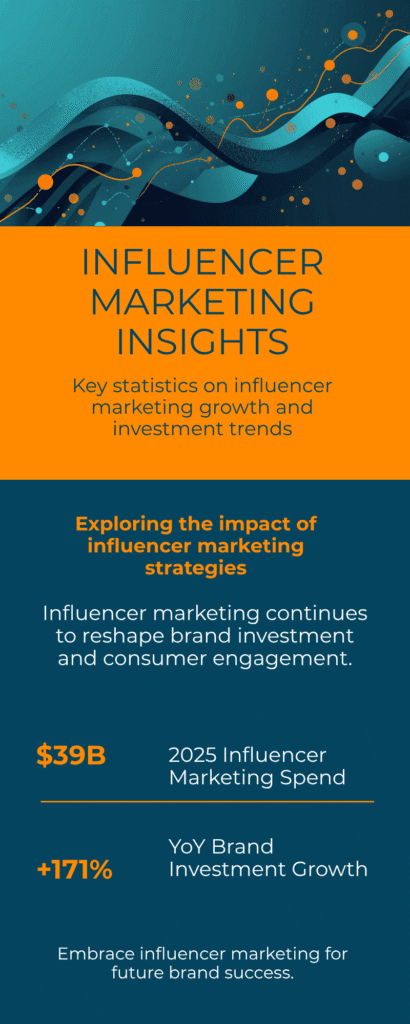
Learning how to start influencer marketing agency has never been more urgent or more promising. The influencer marketing industry is no longer a niche experiment; it’s a global economic engine. In 2025, worldwide spending on creator collaborations surged past $39 billion, with global brand investment in creator partnerships jumping 171% year-over-year.
For aspiring founders, knowing exactly how to start an influencer marketing agency can transform this opportunity into a profitable, sustainable venture. This guide delivers exactly that: a comprehensive, step-by-step blueprint for launching your own agency, informed by the latest industry data and real-world agency practices.
Whether you are a marketer looking to branch out on your own, an entrepreneur captivated by the creator economy, or an established agency owner expanding into influencer marketing, you will find actionable insights, practical checklists, and the symmetrical framework that makes execution straightforward.
Symmetry in Strategy, Symmetry in Success. From niche selection to client acquisition, the steps that follow are designed to mirror each other in structure and clarity because a well-ordered business is a scalable business.
What Is an Influencer Marketing Agency?
An influencer marketing agency is a specialized firm that connects brands with social media creators to execute campaigns across platforms like Instagram, YouTube, TikTok, and emerging channels. Unlike traditional digital agencies that may offer influencer marketing as a secondary service, a dedicated influencer agency focuses entirely on the entire campaign lifecycle: strategy, creator matchmaking, execution, and performance analysis.
Think of the agency as both matchmaker and campaign architect. It doesn’t simply pair brands with influencers, it compiles partnerships based on goals, audience data, and market trends. For a deeper look at how agencies work with brands across the campaign lifecycle, explore our detailed guide on agency approaches.
The scope of an influencer marketing agency can vary widely. Some agencies operate as full-service partners, managing everything from strategy development to paid amplification. Others specialize in a single vertical beauty, gaming, SaaS, AI or fitness and build deep expertise in that niche. The common thread is a commitment to leveraging creator influence to drive measurable brand outcomes.
What Services Does an Influencer Marketing Agency Offer?
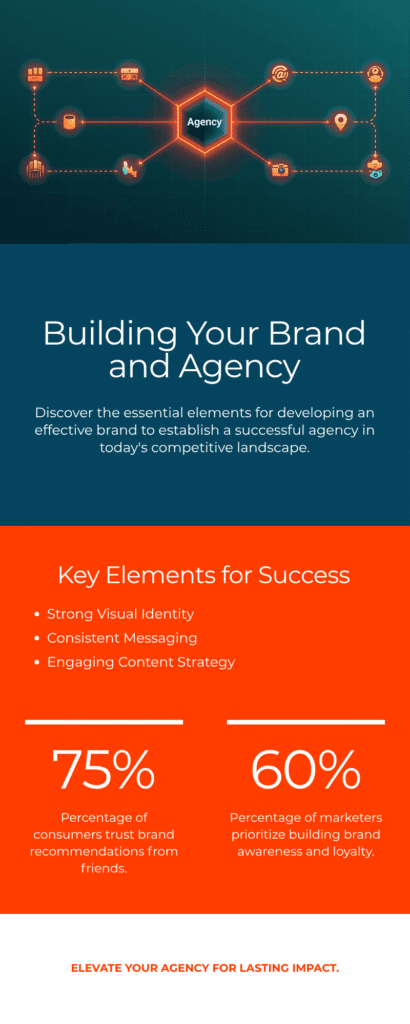
A well-run agency typically delivers a tiered suite of services that can be bundled or offered à la carte:
| Service Category | Core Deliverables |
|---|---|
| Strategy & Consulting | Campaign road mapping, audience analysis, platform selection |
| Creator Discovery & Vetting | Influencer identification, authenticity audits, demographic analysis |
| Campaign Management | Briefing, content coordination, compliance monitoring, budget management |
| Performance Analytics | Engagement tracking, conversion measurement, sentiment analysis |
| Amplification & PR | Paid boosting, email integration, earned media extension |
| Talent Management | Long-term creator partnerships, ambassador program oversight |
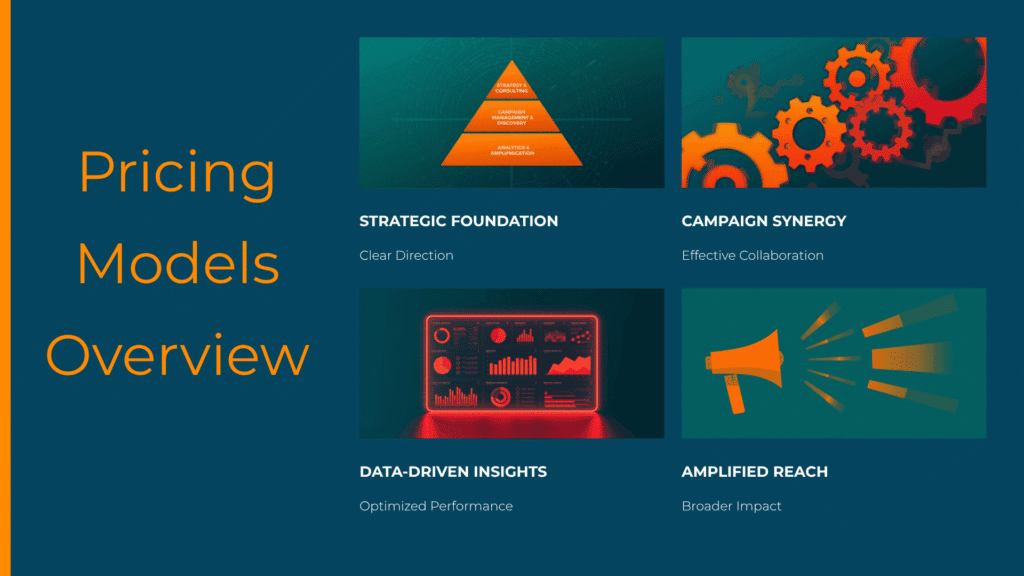
Each of these services can be packaged into one of three common pricing models: retainer-based (monthly fee for ongoing services), project-based (flat or tiered fee per campaign), or commission-based (percentage of campaign spend or performance bonus).
How to Start an Influencer Marketing Agency: The 10-Step Blueprint
Launching a successful agency follows a logical sequence. What follows is a step-by-step guide designed with intentional symmetry… each phase of business creation mirrors the next in cadence and clarity.
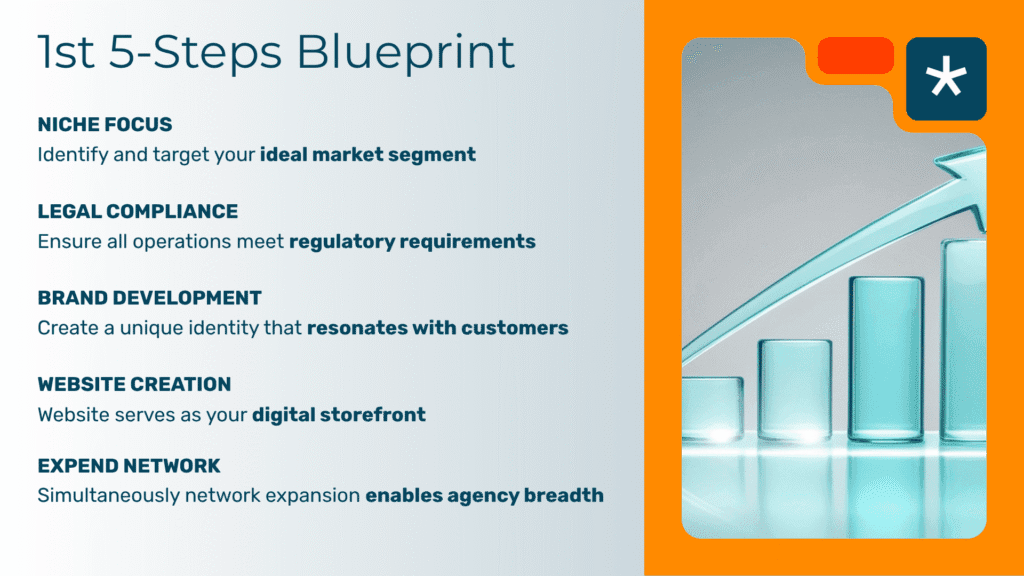
Step 1: Define Your Niche, Sharpen Your Focus
Strategic Specialization Drives Strategic Differentiation. Attempting to serve every industry dilutes your expertise and confuses your target market. Instead, specialize by:
- Industry vertical: Fashion, beauty, tech, gaming, fitness, food, or finance.
- Platform expertise: TikTok tutorials, Instagram Reels, YouTube reviews, LinkedIn thought leadership.
- Audience segment: Gen Z, millennials, luxury shoppers, or B2B professionals.
Niching sharpens your positioning, enabling you to craft tailored proposals and build recognized authority faster than a generalist agency. Understanding the full picture, influencer marketing advantages and disadvantages across different niches will help you choose a specialization that balances opportunity with manageable risk.
Step 2: Legally Structure, Officially Secure
Formal Foundations Foster Future Confidence. Before signing your first client, establish a legal and operational backbone:
- Register your business entity: Most agencies form an LLC for liability protection and tax flexibility.
- Obtain an EIN and open a dedicated business bank account.
- Draft essential contracts: Influencer agreements (covering deliverables, usage rights, and FTC compliance), client service agreements, and non-disclosure agreements.
- Understand advertising regulations: In the U.S., FTC guidelines mandate clear disclosure of sponsored content; agencies must ensure every campaign complies.
Legal readiness enables operational steadiness. Skipping this step exposes your agency to disputes, fines, and reputational damage.
Step 3: Build Your Brand, Shape Your Identity
Distinct Brand Identity Drives Market Authority. Your agency’s brand encompasses name, logo, visual identity, tone of voice, and core messaging. Every element should communicate professionalism and your unique value proposition. Key actions:
- Choose a memorable, industry-relevant agency name.
- Develop a consistent visual system (color palette, typography, layout).
- Craft a concise brand story that explains why you exist and whom you serve.
Strong branding commands attention; weak branding invites indifference.
Step 4: Create Your Website, Capture Your Audience
Your website serves as your digital storefront opened 24/7, ready to convert visitors into leads. Essential pages include:
- Service pages with clear descriptions and pricing tiers.
- Case study or portfolio section showcasing past campaign results.
- Lead capture mechanisms (contact forms, live chat, newsletter sign-ups).
- Blog or resource hub optimized for search terms like “How to Start Influencer Marketing Agency.”
Include trust signals… testimonials, partner logos, certifications to build immediate credibility. Digital presence builds business essence.
Step 5: Develop Your Network, Expand Your Reach
Robust Relationships Reinforce Resilient Operations. Influencer marketing runs on connections. Build a curated database of vetted creators using:
- Discovery platforms (Upfluence, CreatorIQ, HypeAuditor)
- Manual social media searches (Instagram hashtags, TikTok trends)
- Direct outreach campaigns with clear, mutually beneficial incentives
Establish benchmarks for authenticity, engagement rate, and demographic alignment. To build a compelling pitch for both creators and brands, you need to articulate exactly how influencers help brands on social media from building trust and credibility to expanding reach and driving conversions.
Step 6: Craft Your Business Plan, Chart Your Course
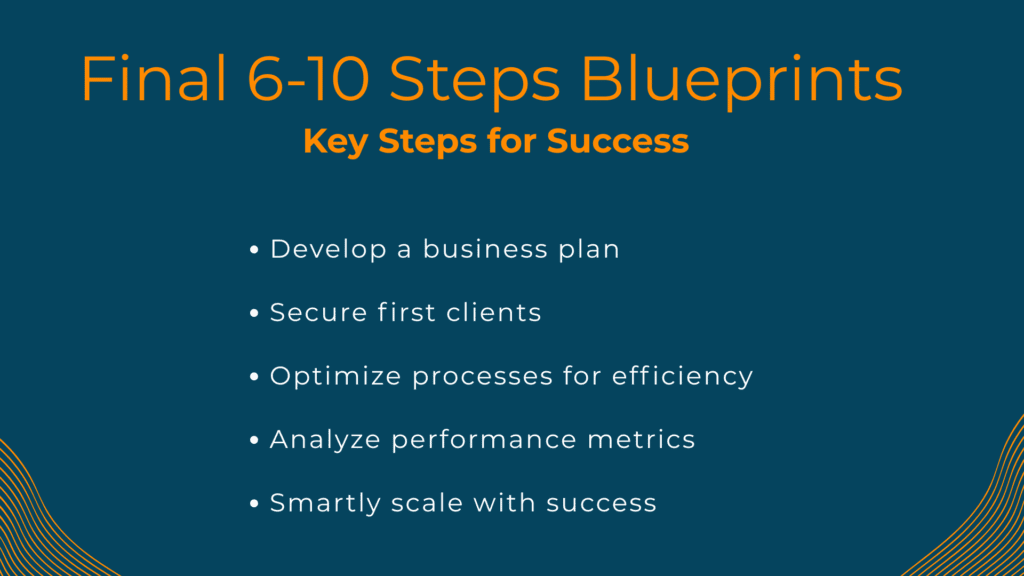
A comprehensive business plan is your strategic compass. It should include:
- Executive summary and mission statement.
- Service catalog and pricing structure.
- Target market definition and ideal client profile.
- Financial projections: Startup costs, revenue forecasts, and break-even analysis. Startup investments typically range from $5,000 to $30,000 for a lean launch, or $25,000 to $75,000 for a fully equipped agency.
- Client acquisition strategy: SEO, paid ads, outbound sales, and referral systems.
Clear planning precedes confident execution.
Step 7: Secure Initial Clients, Build Case Studies
First Wins Fuel Future Growth. To land your first clients:
- Offer discounted or trial campaigns to select brands.
- Define clear KPIs (reach, engagement, conversions).
- Document every stage thoroughly before, during, and after.
One well-executed campaign can be packaged into case studies, pitch decks, and sales emails that win future business.
Step 8: Standardize Processes, Streamline Execution
Operational Systems Enable Operational Scale. Develop Standard Operating Procedures (SOPs) for:
- Creator briefing and onboarding
- Content review and approval
- Campaign tracking and reporting
- Issue escalation and resolution
For a real-world framework on how agencies approach influencer marketing from strategy through execution, refer to our step-by-step agency workflow guide, it maps directly to the SOP categories you’ll need to build.
Tools like Asana, ClickUp, Sprout Social, and GRIN help centralize workflows and maintain quality as volume increases. Systematic operations sustain scalable growth.
Step 9: Measure Performance, Refine Strategies
Data-Driven Decisions Drive Continuous Improvement. Move beyond vanity metrics. Track:
- Conversion rates and cost-per-action
- Brand sentiment via comments and social listening
- Creator-specific performance patterns
- Attribution paths from influencer content to sales
Understanding what the definition of a rate in influencer marketing is equally critical knowing how influencer pricing works (CPM, flat rates, performance-based) helps you benchmark campaign efficiency and negotiate more effectively on behalf of clients.
Step 10: Scale Smart, Sustain Success
Sustainable Growth Requires Sustainable Systems. Once workflows stabilize, scale through:
- Hiring specialists (account managers, content strategists, data analysts)
- Automating repetitive tasks with AI and integrations
- Expanding services (paid amplification, talent management, PR)
Diversifying revenue streams through retainer packages, performance bonuses, and add-on services creates financial resilience. Scale smart, sustain success.
Common Mistakes to Avoid When Starting Your Influencer Marketing Agency
Even the most eager entrepreneurs stumble. Avoid these pitfalls:
- Chasing Follower Counts Over Engagement Rates: A creator with 10,000 highly engaged followers often delivers better results than one with 100,000 passive followers.
- Neglecting Legal Compliance: Failing to include clear FTC disclosure requirements in contracts can trigger regulatory penalties and client distrust.
- Offering Everything to Everyone: Generalist agencies struggle to differentiate. Niche expertise commands higher fees and stronger client loyalty. To understand how to choose an influencer marketing agency from the client’s perspective reveals exactly what brands value, experience, case studies, niche expertise, and clear pricing. So, you can build those qualities into your agency from day one.
- Skipping the Business Plan: Flying blind leads to cash flow crises and strategic drift. A written plan is a non-negotiable foundation.
- Undervaluing Your Services: Discounting too deeply erodes perceived value and attracts low-quality clients. Price for the value you deliver.
Awareness prevents mistakes; intentionality builds excellence.
Tools to Power Your Influencer Marketing Agency
| Function | Recommended Tools |
|---|---|
| Influencer Discovery | Upfluence, CreatorIQ, HypeAuditor, Heepsy |
| Campaign Management | GRIN, Sprout Social, CreatorIQ |
| Project Management | Asana, Monday.com, ClickUp |
| Analytics & Reporting | Google Looker Studio, Meltwater, HypeAuditor |
| CRM & Sales | HubSpot, Pipedrive, Salesforce |
| Legal & Contracts | Rocket Lawyer, Ironclad, industry template agreements |
Conclusion: From Blueprint to Reality
Starting an influencer marketing agency is a journey that blends creativity with commerce, intuition with data, and ambition with structure. At TrustedIMA, we’ve seen this blueprint work in practice. The steps outlined above provide a clear, symmetrical pathway: define and refine, plan and execute, measure and scale. The influencer marketing market is projected to reach $121.81 billion by 2030, growing at a CAGR* of 31.42%. There has never been a more promising time to enter this space.
Curious about the financial upside? Our breakdown of how much influencer marketing agencies make reveals real revenue ranges from $1,000/month for small client to 18,000+/month for enterprise retainers…and the profit margins that sustain successful agencies.
Your next step? Turn this blueprint into action. Start by defining your niche, then move through each phase methodically. Every successful agency began exactly where you are now with a decision to build something meaningful in the creator economy.
If you’d rather skip the startup curve and partner with an agency that already knows the playbook, see how TrustedIMA delivers influencer marketing for leading brands.
* CAGR is stand for Compound Annual Growth Rate
FAQs
What are the first steps to take if I want to start an influencer marketing agency?
The very first step is defining a specific niche whether by industry (beauty, gaming, SaaS), platform (Instagram, TikTok, YouTube), or audience (Gen Z, B2B). From there, you should legally register your business, draft contracts, build a brand identity, create a conversion-focused website, and start developing relationships with both creators and potential brand clients. The blog’s 10-step blueprint walks you through each of these phases in a logical, symmetrical order.
How much does it cost to start an influencer marketing agency?
Startup investments can vary widely. A lean, founder-run agency can launch with as little as $5,000 to 10,000, covering legal fees, a basic website, and essential tools. A more fully equipped agency with dedicated software, paid advertising, and initial staffing typically ranges from 25,000 to 75,000. Costs depend on whether you use freelance help, premium influencer discovery tools, or invest heavily in marketing from day one.
What legal requirements should I know before launching an influencer marketing agency?
You’ll need to register your business entity usually an LLC for liability protection, obtain an EIN, and open a separate business bank account. Critically, you must draft proper contracts for both clients and influencers. These should clearly define deliverables, payment terms, content usage rights, and compliance with FTC guidelines for sponsored content disclosure. Overlooking legal readiness can lead to disputes, fines, and reputational damage.
How can I find influencers to work with when I don’t have a track record?
Start with a mix of manual research (hashtags, TikTok and Instagram discovery pages, YouTube searches) and affordable or free trials of influencer platforms like Upfluence, Heepsy, or HypeAuditor. Reach out directly with a clear, mutually beneficial pitch. You don’t need an enormous roster; a small, vetted database of engaged creators whose audiences align with your niche works far better than a large list of unverified profiles.
Which pricing model works best for a new influencer marketing agency?
There is no single “best” model. It depends on your services and client type. Many new agencies begin with project-based fees to land early clients and build case studies, then transition to monthly retainers for stable income. A commission model (a percentage of campaign spend or a performance bonus) can also work when you’re confident in delivering measurable results. The blog details three core models: retainer, project, and commission.
Do I need to be an influencer myself to start an influencer marketing agency?
No. While a personal social media presence can help, it is not a requirement. What matters is your ability to match the right creators with brand goals, manage campaigns, measure performance, and build trust with both sides. Many successful agency founders come from marketing, sales, or project management backgrounds rather than from being content creators themselves.
How long does it take to launch and get the first paying client?
The timeline varies based on your network, niche, and go-to-market strategy. An agency can be legally and operationally launched within a few weeks if you already have some industry contacts. Landing the first paying client might take anywhere from one to three months especially if you use discounted or trial campaigns to generate case studies. Prioritizing one successful, well-documented campaign often unlocks the next five.
What are the biggest mistakes new influencer marketing agency owners make?
Common missteps include chasing follower counts over engagement rates, ignoring legal compliance (especially FTC disclosure rules), trying to serve every industry instead of niching down, launching without a business plan, and undervaluing services with excessive discounts.
How can I scale my influencer marketing agency once it’s established?
Scaling smart requires standardizing processes with SOPs, adopting project management and campaign tools, and hiring specialists such as account managers or data analysts. Automating repetitive tasks and expanding service offerings like paid amplification, talent management, and PR also drive growth. The key is to build sustainable systems that can handle increased volume without sacrificing quality, as captured in the principle “scale smart, sustain success.”